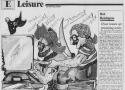
I thought it would be interesting to look at how hackers were portrayed in illustrations from print news media and magazines from the early to mid 1980s, when the stereotypes and tropes of hackerdom were less set in stone.


On this site, I talk about cynicism, nostalgia, and digital culture. You’ll find unique digital lore here and other liminal strangeness. I want to highlight the downright weird millennial technology experience. Living through the birth of ubiquitous computing had both positive and negative aspects. I’m talking (mostly) about the 1990s and 2000s, when the internet was just beginning to take over our lives...
Research into historical fabric-making/sewing/knitting/etc., focused on European countries (I think?).

We live in a world where the lines between marketing and journalism are constantly blurred. Sometimes content drives marketing; sometimes marketing drives content. Trying to find an objective middle? Now that’s hard. But there was once a time when the objective middle was much more obvious, where you knew what you were getting. So, where did the lines begin to blur? One could point to the infomercials of the ’90s or native advertising of the 2010s, but the point where things got really interesting might have come in the form of a trend that explicitly merged art and commerce in a way that ensured we’d never again be able to tear them apart. Today’s Tedium discusses the “magalog,” an unholy merger of content and sales that once dominated the marketing world.
This font used on the gateposts of the former Haghill Public School in the East End of Glasgow is just superb. Designed by A. Lindsay Miller and built in 1904, the school was demolished in 2022, but it's hoped some of the original features will be incorporated in the affordable housing planned for the site.
When we lose old building, we lose not just the walls and the roof, but also all the other little design details which makes each building unique, like these sculpted signs, and once they're gone, they are lost forever as they're often left undocumented.