From community centers, support groups, and feminist bookstores to drag bars, gay discos, and one of the last lesbian bars in the country, Nashville has a diverse LGBTQ history—reaching all the way back to the Civil War! Today we’ll explore all of these things, and meet some of the trailblazers who opened Nashville’s first gay bars, organized the first Pride gatherings, and even affected national policy. Welcome to the Nashville Sites LGBTQ History Tour!

The Lighthouse Passport Program provides enthusiasts the opportunity to help preserve lighthouses as well as a wonderful way to keep a pictorial history of their lighthouse adventures. Small donations made by Passport holders generate thousands of dollars for lighthouse restoration and preservation projects.
The Curious Travellers project explores travel and tourism in Britain and Ireland in the late C18th and early C19th. It does so through the writings of the Flintshire naturalist and antiquarian Thomas Pennant (1726-1798), and of others who followed in his footsteps. Focused primarily on tours of Scotland and Wales, the project has been funded in two phases by the Arts and Humanities Research Council (AHRC) and is supported by numerous partners. It is a collaboration between The University of Wales Trinity St David, Glasgow University and the Natural History Museum: you can learn more about our project team here. Our website provides access to our digital editions and other resources, blogs and events.
I LOVE finding super-specific websites on obscure topics!
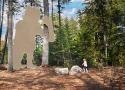
This ambitious public art project is presented by Scan Design Foundation, whose mission is to support Danish-American relations with a focus on environmental sustainability. NWTrolls: Way of the Bird King features six giant hand-built troll sculptures by Danish environmental artist, Thomas Dambo. The publicly-accessible sculptures are located around the Pacific Northwest where each whimsical troll sculpture is part of an underlying environmental story. The project celebrates the human experience of art by amplifying the connections of cultural heritage between Coast Salish tribal communities and Scandinavian traditions. Thanks to our funding partners and host site partners, there is no admission fee to visit any of the trolls.
We've compiled a map of bookswaps in London. These are places where you can:
- Take a book for free
- Leave one for somebody else to enjoy
- Do both!
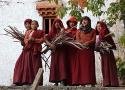
How can I express the joy, the peace, the love of sharing time in this community? The riches of living with so little, sharing the daily life and chores, the gifts of laughter and work. You might think this way of life is such a struggle, a difficult life, and feel the urge to want to give things, to make life easier. Yet Kunzes and I both agree that we are the ones who are rich, that we have such a precious life, making do with what we have, working together for what we need, not desiring more. We are the ones who feel we have all we need, rich beyond measure, and wanting to share this with you…
Welcome to Searchable Sea Literature, a free online resource devoted to works by North American authors who write about the ocean. These works include fiction, nonfiction, poetry, and plays.
In September 1993, I was staring at the world map pinned to the wall over the computer, contemplating all the places Karin and I planned on visiting in short excursions from work over the next twenty years. Suddenly I realized we could make a continuous path out of the trips. I quickly justified it by saying that the separate trips would not leave enough time to see much, and would be more expensive. The daydreams started to sound like good ideas, then I started justifying a longer, or more open-ended time and money allocation!
Six years of reading rec.travel allowed me to think that way. Discussing it with Russell Gilbert and other travellers became time consuming, so I organized this guide as a FAQ (Frequently Asked Questions) for the newsgroups, a starting point for further discussion, and my small contribution to fellow travellers. All comments are welcome and appreciated.
We left in July 1995 and "The Trip" was even better than we expected. Here is where we went for 31 months (arrows are flights): Florida → Dallas → Denver, San Francisco, Yosemite, LA → Singapore, Malaysia, Indonesia → Australia → New Zealand → Singapore, Malaysia, Thailand, Laos, China, Pakistan, India, Nepal, India → Netherlands → Florida → Caribbean → Florida → Caribbean → Florida and SE USA. We came home early to see family and save up for future travel. Some of the places we want to visit next are Peru, Turkey, Southern Africa, Southern India, Myanmar, and Cambodia.
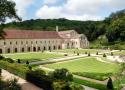
As France (and Europe) slowly got its act together in the late Middle Ages, cities reemerged as places to trade and thrive. Abbeys gradually lost their relevance in a brave new humanist world.
The French Revolution finally closed the book on monastic life, as the public rebelled against Church corruption. While many French abbeys were destroyed, others survive — and continue to inspire thoughtful visitors. Here are the top ones for travelers