This is a HUGE archive of livejournal icons I saved/collected between 2006 to 2011. It's definitely an internet time capsule of sorts. (I used to collage these into pages to decorate my 3-ring binders for school.) These were my first introductions to graphics editing, super early internet jokes, and things that would evolve into aesthetic moodboards that would later appear on tumblr.

How to block certain topics/keywords on DW
If you want to give people another options from leaving a comment...
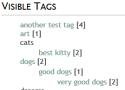
Some shortcuts to using helpful tools on Dreamwidth!
Someone on IRC was talking about the origin of the name Dreamwidth Studios. I think this has never been posted before, so I went and dug up some old emails. These are all from March and very early April of 2008. I pulled out relevant sections, too, so they're slightly diced up.
Anyway, I hope people enjoy this. This all took place on the "Project Crazy" mailing list, which is what I called it. Because really, we all had jobs and lives, this was kind of an insane proposition. Yet here we are today.
So, this is basically fifteen years' of trial-and-error learning on how to make dreamwidth posts that will produce good comment discussions involving lots of people. After fifteen years, I am at the point where if I'm sitting at home feeling depressed and in need of human conversation, I can make a DW post and have enough comment notifications to keep me in ego boost for several days. And a lot of what makes this work is just fairly simple strategies that I wish more people knew.
For the curious, icons are used in a very similar way to how reaction images and gifs are used on Tumblr.
I know a lot of people who don't visit DW very often because they think it isn't active. Well, it isn't Twitter or Tumblr, but there's plenty going on! So I thought I would compile a list of active comms that can help fandom peeps put some life into their DW reading lists and keep them apprised of upcoming events.
from sharpiefan, posted 2018
This is my attempt at compiling a masterlist of masterlists of communities on Dreamwidth. Obviously this will always be a work in progress and I'm going to add lists as soon as I find them.
Has a lot of tutorials on specific Dreamwidth things, with guides for people coming from other social media platforms
7 basic tips, very easy to read/understand if you're overwhelmed with the other guides
See also: Finding People on Dreamwidth
Resource list to other posts about being on DW!
I've heard that some people are joining DW and then finding it really difficult to figure out how to find content that they want to see when DW doesn't have an algorithm to suggest things to you. So I thought I'd share my methods of finding content that I want to see.

This is something of a follow-up to my first Dreamwidth primer, because I completely forgot to talk about it. The features discussed in this post will be old hat to people familiar with LJ/DW style comments – this is mostly for Tumblr users.
so here is a primer for those of you thinking about making a dreamwidth account. this post ranges from your really basic starter tips to the completely esoteric things that come from using it for a decade.
Written 2018, so a bit out of date. But still good!
One of my favorite kids books! And weirdly available online?
In September 1993, I was staring at the world map pinned to the wall over the computer, contemplating all the places Karin and I planned on visiting in short excursions from work over the next twenty years. Suddenly I realized we could make a continuous path out of the trips. I quickly justified it by saying that the separate trips would not leave enough time to see much, and would be more expensive. The daydreams started to sound like good ideas, then I started justifying a longer, or more open-ended time and money allocation!
Six years of reading rec.travel allowed me to think that way. Discussing it with Russell Gilbert and other travellers became time consuming, so I organized this guide as a FAQ (Frequently Asked Questions) for the newsgroups, a starting point for further discussion, and my small contribution to fellow travellers. All comments are welcome and appreciated.
We left in July 1995 and "The Trip" was even better than we expected. Here is where we went for 31 months (arrows are flights): Florida → Dallas → Denver, San Francisco, Yosemite, LA → Singapore, Malaysia, Indonesia → Australia → New Zealand → Singapore, Malaysia, Thailand, Laos, China, Pakistan, India, Nepal, India → Netherlands → Florida → Caribbean → Florida → Caribbean → Florida and SE USA. We came home early to see family and save up for future travel. Some of the places we want to visit next are Peru, Turkey, Southern Africa, Southern India, Myanmar, and Cambodia.